|

Shree Ganeshai Namah
Introduction
General information
The Hindu festivals, fasts, rituals, holy baths and the observance of sacred days are part and parcel of the great cultural heritage. They are religious and social and a great source of spiritual and moral enrichment. They also lend zest, variety, colour and grandeur to an otherwise insipid, routine and care-worn day-to–day human existence. The Hindu festivals are more than what they appear to be. They are essentially a way of living and thinking in the course of existence, and as such bring their whole right to bear on the individual and the society.
Unlike the deities of the Hindu pantheon, the festivals are numerous and frequent, but basically religious, psychological and intimately connected with the changes of seasons, though many of them have lost the history of their origin in the mists of hoary past. With passage of time they have undergone a process of transformation and evolution and many new festivals have been grafted upon the old ones.
A Hindu festival is, in fact, something more than a ‘festival’. It is cathartic in nature, and as a means of purification strengthens the spirit within. Their goal is to find enjoyment through renunciation and self-denial. They are more of an exploration of the colourful things of life, without being bound to or obsessed by them.
Why do we require panchang for different cities (Countries)?
Most people buy the Panchang from India and use it everywhere in the world. This is not a good practice and one could lead to people observing festivals on incorrect days and at incorrect times abroad. Each festival has a different set of rules about when to observe them.
Hindu festivals are generally based on the Tithi and/or Nakshatra as per the lunar calendar (& some as per the solar calendar). For example, Ganesh Chaturthi is Bhadrapad Shukla Chaturthi Madhyahn purvavidha vyapini (4th tithi prevailing at midday).
Each tithi begins and ends at the same instant all over the world. After correcting for the time zones, the tithi will begin/end at different local times in different parts of the world. The next thing is to decide if the tithi is visible during the specified time. This is done by using local sunrise, local sunset and local moonrise times. Since India has little variation in terms of sunrise/sunset, a panchang computed for one area of the country is generally usable throughout the country. For example - on a given day if Chaturthi end time is 2:30pm in India. Hence, UK will observe the chaturthi end time of 9:00am (GMT). This clearly indicates in the United Kingdom that the Chaturthi tithi is not prevailing during madhyahan kal (noon time) but it does prevail in India. Hence, the UK will celebrate Ganesha chaturthi on the previous day, as the chaturthi prevails during the noon on the previous day (chaturthi start time is 9:30am GMT in the UK.). What is important is to observe the festival at the right time in your location. If you blindly use the Indian calendar published in India, it won’t be any good to you as the festival observance dates might change due to local sunrise, sunset, moonrise, time differences etc.
The panchang available in India only prints end times in Indian standard times (IST). You need to convert them to your local standard time and use local sunrise and sunset to find out when it can be observed. Most common mistakes people make is observing Pradosh and Ekadashi vrat on incorrect days by following the Indian panchang printed in India.
Gujarati GCSE Classes online. (Pearson Edexcel GCSE 9-1 - See below for details).
This month’s main Panchang Details.
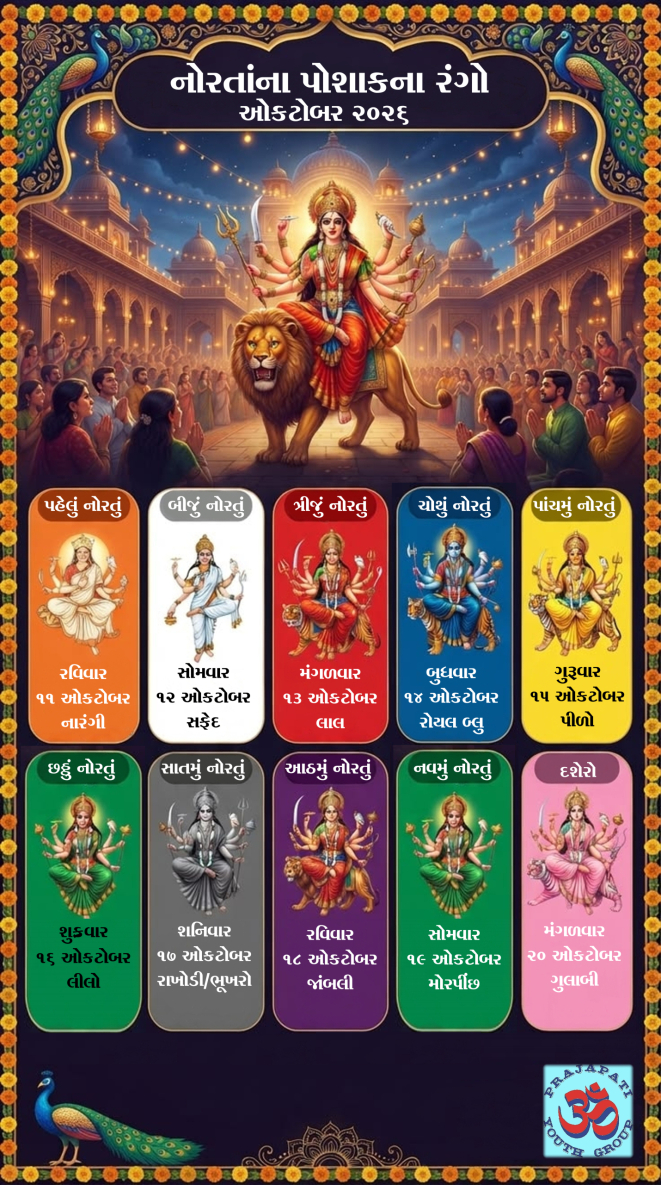
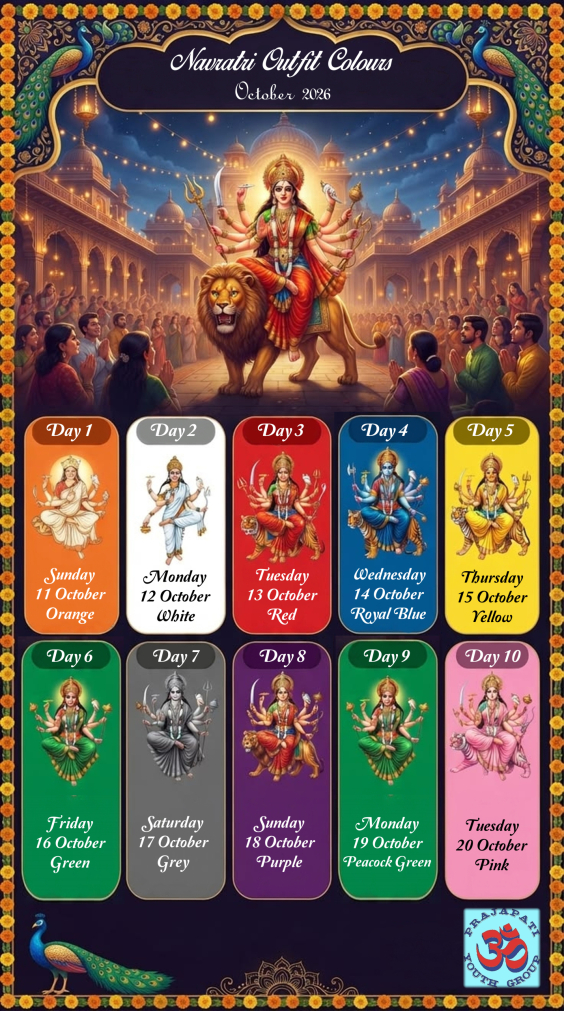
Navratri Starts today -
Sunday, 11 October 2026
Saraswati Aavahana-Mool, Friday, 16 October 2026
Saraswati Poojan-P.Sha., Saturday, 17 October 2026
Mahashtami, Durgashtami, (Saraswati Balidan from 8:19 - U.Sha.) on Sunday, 18 October 2026
Mahanavmi, Naived Nom, (Saraswati Visarjan from 11:08 - Shravan) on Monday, 19 October 2026 (9th Vruddhi Tithi - UK)
Dashera, Vijaya Dashmi, (Vijay Muhurat 14:32 to 15:13) on Tuesday, 20 October 2026
Sharad Purnima, Kojagari Purnima (with Nishit Muhurat), Valmiki Jayanti, Sunday, 25 october 2026
Sankasht Chaturthi, Karak, Karva Chauth, Moon rise 18:18, Thursday, 29 October 2026
NAVRATRI INVITATION -
File: 2026PYGInvite.pdf
at The Heathland School
Wellington Road South
Hounslow, TW4 5JD
8:00pm until 10:30pm
NAVRATRI DATES and COLOURS
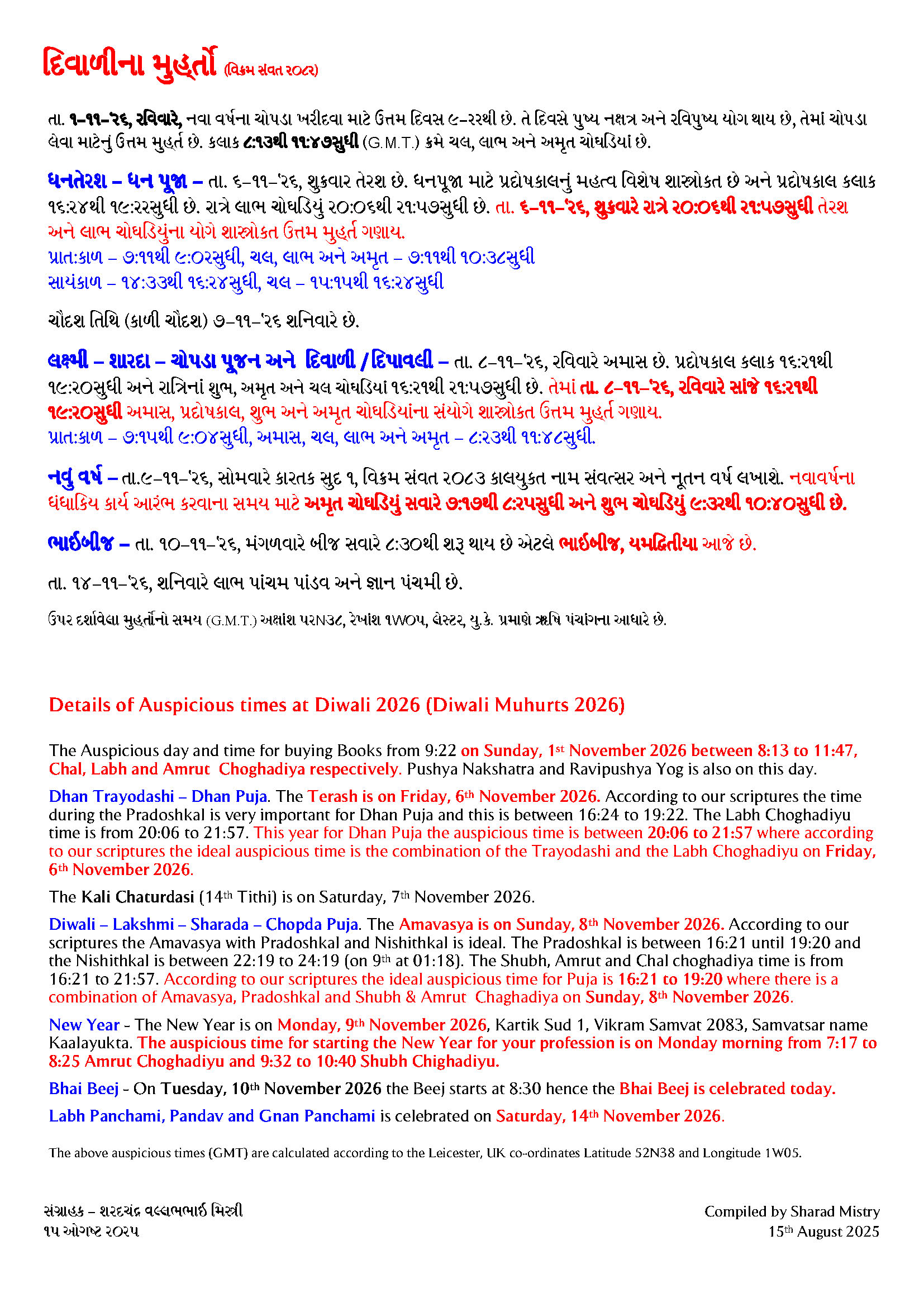
Diwali 2026 - Muhurt
Image: DetailsofAuspicioustimesatDiwali2026.jpg
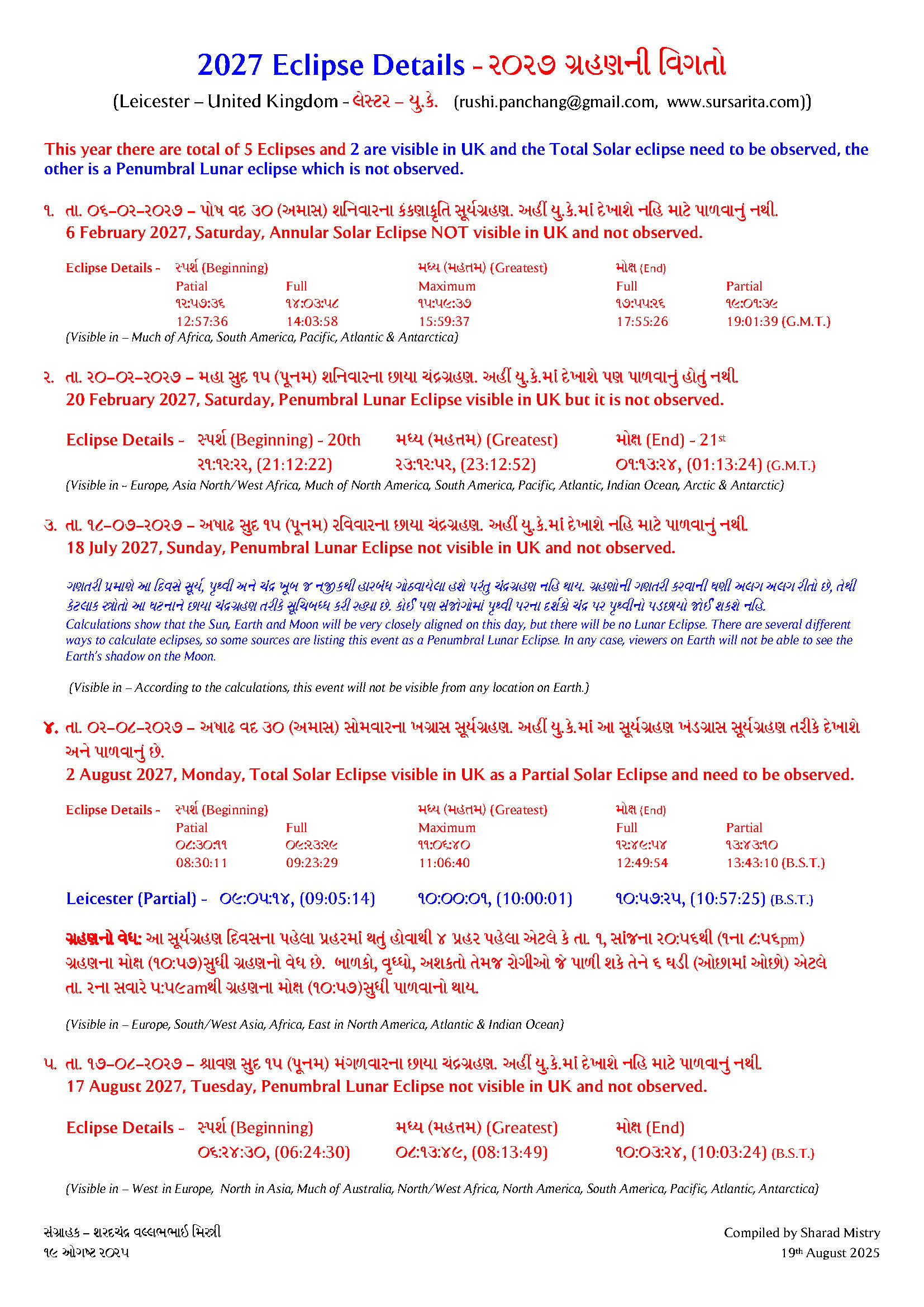
Eclipse Details 2027
Image: EclipseDetails2027-Leicester.jpg
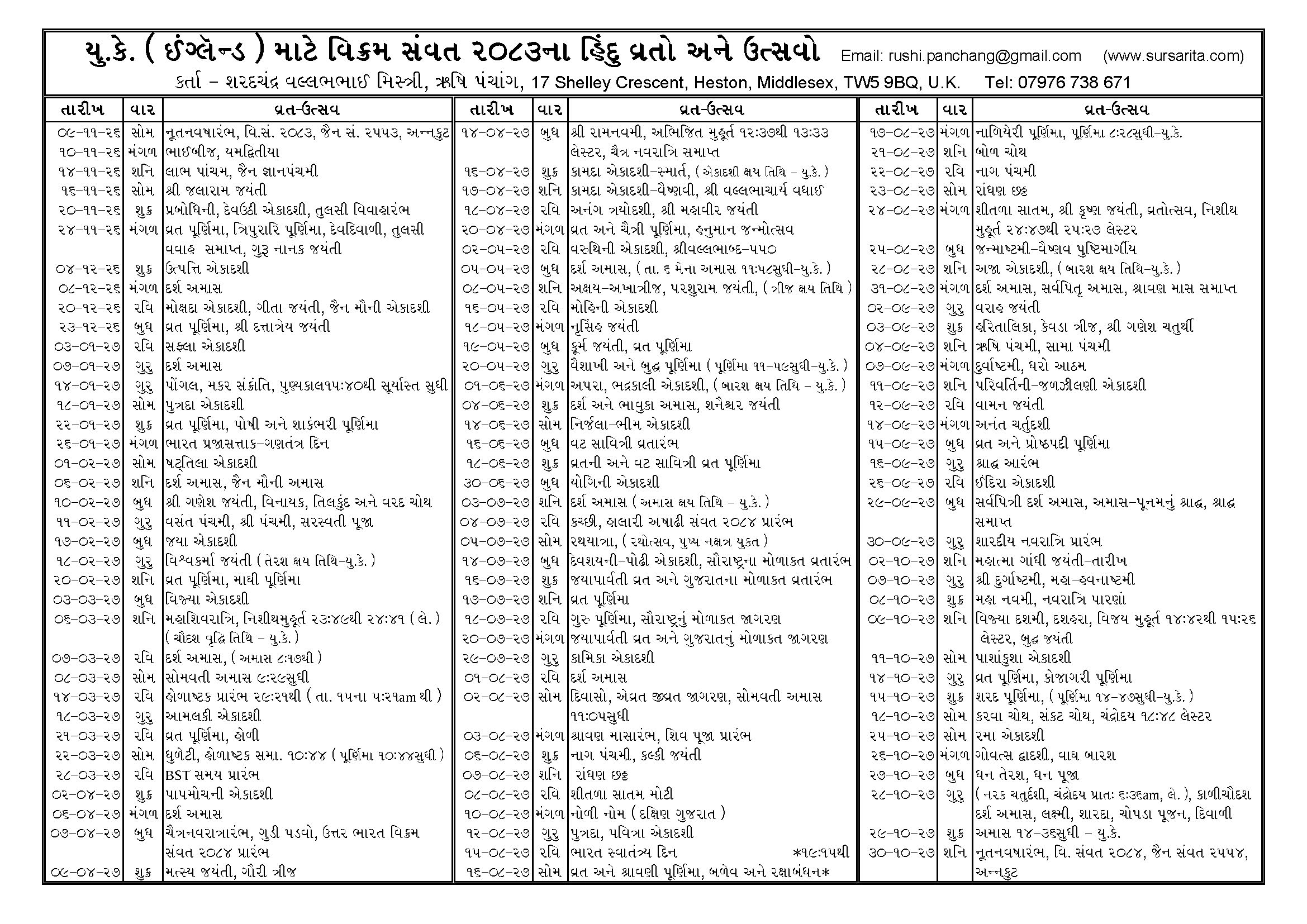
Festival List - 2026-27 - Gujarati
Image: Festivals_G_2027.jpg
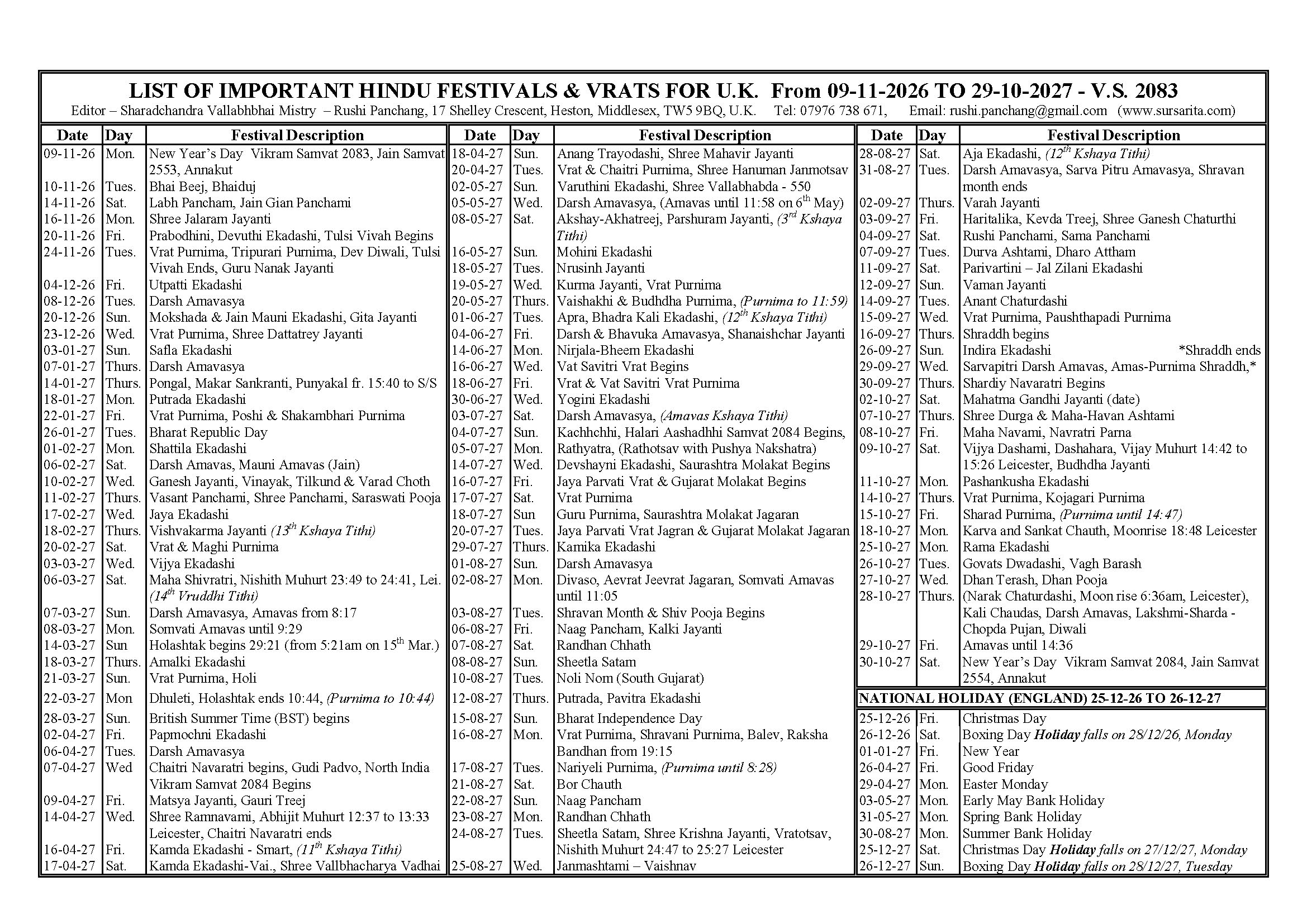
Festival List - 2026-27 - English
Image: Festivals_E_2027.jpg

If you would like a copy of the Rushi Panchang VS 2083 - 2026/27.
Please call 07976 738671 for further details.
or email at Rushi.Panchang@gmail.com
The auspicious times are calculated according to the Leicester, UK co-ordinates Latitude 52N38 and Longitude 1W05.
--------------------------------------------------
(Website Contact Email: pyg_hounslow@hotmail.com)
_________________________________________
___________________________________________________
LIST OF IMPORTANT HINDU FESTIVALS & VRATS FOR U.K.
From 22-10-2025 TO 08-11-2026 - V.S. 2082
(Prepared according to local UK Time).
Important Note:
The Hindu festivals are generally based on a certain Tithi (roughly translated as the lunar phase) or the Nakshatra (Position of Asterisms with respect to the moon and the earth) in a given month or the transition of other heavenly bodies. When the time and place differ a lot from the place for which the Panchang (Religious Almanac) is computed the occurrence of the festival on a given day could change. To correctly compute the time and date of a festival, one must compute the Tithi, Nakshatra etc. for that place in terms of the local time of that place. The festival celebration times and days/dates listed here are calculated according to local UK times and these may differ from other places in the world (e.g. India, USA).
|
Date
|
Day
|
Festival Description
|
|
22-10-25
|
Wed.
|
New Year’s Day Vikram Samvat 2082, Jain Samvat 2552, Annakut
|
|
23-10-25
|
Thurs.
|
Bhai Beej, Bhaiduj, Chandra (Moon) Darshan (until 17:59)
|
|
26-10-25
|
Sun.
|
Labh Pancham, Jain Gian Panchami, Greenwich Mean Time (GMT) begins
|
|
28-10-25
|
Tues.
|
Shree Jalaram Jayanti
|
|
01-11-25
|
Sat.
|
Prabodhini, Devuthi Ekadashi, Tulsi Vivah Begins
|
|
05-11-25
|
Wed.
|
Vrat Purnima, Tripurari Purnima, Dev Diwali, Tulsi Vivah Ends, Guru Nanak Jayanti
|
|
15-11-25
|
Sat.
|
Utpatti Ekadashi
|
|
19-11-25
|
Wed.
|
Darsh Amavasya
|
|
01-12-25
|
Mon.
|
Mokshada & Jain Mauni Ekadashi, Gita Jayanti
|
|
04-12-25
|
Thurs.
|
Vrat Purnima, Shree Dattatrey Jayanti
|
|
15-12-25
|
Mon.
|
Safla Ekadashi
|
|
19-12-25
|
Fri.
|
Darsh Amavasya
|
|
30-12-25
|
Tues.
|
Putrada Ekadashi
|
|
02-01-26
|
Fri.
|
Vrat Purnima
|
|
03-01-26
|
Sat.
|
Poshi & Shakambhari Purnima, (Purnima to 10:03)
|
|
14-01-26
|
Wed.
|
Shattila Ekadashi, Pongal, Makar Sankranti, Punyakal from 9:38 to Sunset
|
|
18-01-26
|
Sun.
|
Darsh Amavas, Mauni Amavas (Jain)
|
|
22-01-26
|
Thurs.
|
Ganesh Jayanti, Vinayak, Tilkund & Varad Choth
|
|
23-01-26
|
Fri.
|
Vasant Panchami, Shree Panchami, Saraswati Pooja
|
|
26-01-26
|
Mon.
|
Bharat Republic Day
|
|
29-01-26
|
Thurs.
|
Jaya Ekadashi
|
|
30-01-26
|
Fri.
|
Vishvakarma Jayanti
|
|
01-02-26
|
Sun.
|
Vrat & Maghi Purnima
|
|
13-02-26
|
Fri.
|
Vijya Ekadashi, (Ekadashi Vruddhi Tith-UK)
|
|
15-02-26
|
Sun.
|
Maha Shivratri, Nishith Muhurt 23:50 to 24:46, Lei.
|
|
16-02-26
|
Mon.
|
Darsh Amavasya, Somvati Amavas from 12:04
|
|
23-02-26
|
Mon.
|
Holashtak begins 25:32 (from 1:32am on 24th Feb.)
|
|
27-02-26
|
Fri.
|
Amalki Ekadashi
|
|
02-03-26
|
Mon.
|
Vrat Purnima, Holi
|
|
03-03-26
|
Tues.
|
Dhuleti, Holashtak ends 11:38, (Punam until 11:38)
|
|
14-03-26
|
Sat.
|
Papmochni Ekadashi
|
|
18-03-26
|
Wed.
|
Darsh Amavasya
|
|
19-03-26
|
Thurs.
|
Chaitri Navaratri begins, Gudi Padvo, North India Vikram Samvat 2083 Begins
|
|
21-03-26
|
Sat.
|
Matsya Jayanti, Gauri Treej
|
|
26-03-26
|
Thurs.
|
Shree Ramnavami, Abhijit Muhurt 11:45 to 12:35 Leicester, Chaitri Navaratri ends
|
|
28-03-26
|
Sat.
|
Kamda Ekadashi, Shree Vallbhacharya Vadhai
|
|
29-03-26
|
Sun.
|
British Summer Time (BST) begins
|
|
30-03-26
|
Mon.
|
Anang Trayodashi, Shree Mahavir Jayanti
|
|
01-04-26
|
Wed.
|
Vrat & Chaitri Purnima, Shree Hanuman Janmotsav
|
|
13-04-26
|
Mon.
|
Varuthini Ekadashi, Shree Vallabhabda - 549
|
|
16-04-26
|
Thurs.
|
Darsh Amavasya
|
|
19-04-26
|
Sun.
|
Akshay-Akhatreej, Parshuram Jayanti
|
|
27-04-26
|
Mon.
|
Mohini Ekadashi
|
|
29-04-26
|
Wed.
|
Nrusinh Jayanti
|
|
30-04-26
|
Thurs.
|
Kurma Jayanti, Vrat Purnima
|
|
01-05-26
|
Fri.
|
Vaishakhi & Budhdha Purnima
|
|
13-05-26
|
Wed.
|
Apra Ekadashi, Bhadrakali Ekadashi-Punjab
|
|
16-05-26
|
Sat.
|
Darsh & Bhavuka Amavasya, Shanaishchar Jayanti
|
|
17-05-26
|
Sun.
|
Adhik Jyeshth, Purushottam month begins
|
|
26-05-26
|
Tues.
|
Kamla Ekadashi
|
|
30-05-26
|
Sat.
|
Vrat Purnima, (Purnima until 9:45 on 31st May)
|
|
11-06-26
|
Thurs.
|
Kamla Ekadashi
|
|
14-06-26
|
Sun.
|
Darsh Amavasya, Adhik Jyeshth ends, (Amavasya Kshaya Tithi)
|
|
25-06-26
|
Thurs.
|
Nirjala-Bheem Ekadashi
|
|
27-06-26
|
Sat.
|
Vat Savitri Vrat Begins
|
|
29-06-26
|
Mon.
|
Vrat & Vat Savitri Vrat Purnima
|
|
10-07-26
|
Fri.
|
Yogini Ekadashi
|
|
13-07-26
|
Mon.
|
Darsh Amavasya, Somvati Amavas from 14:20
|
|
15-07-26
|
Wed.
|
Kachhchhi, Halari Aashadhhi Samvat 2083 Begins, Rathyatra, (Rathotsav with Pushya Nakshatra)
|
|
25-07-26
|
Sat.
|
Devshayni Ekadashi, Saurashtra Molakat Begins, (Ekadashi Vruddhi Tith-UK)
|
|
27-07-26
|
Mon.
|
Jaya Parvati Vrat & Gujarat Molakat Begins
|
|
28-07-26
|
Tues.
|
Vrat Purnima
|
|
29-07-26
|
Wed.
|
Guru Purnima, Saurashtra Molakat Jagaran
|
|
31-07-26
|
Fri.
|
Jaya Parvati Vrat Jagran & Gujarat Molakat Jagaran
|
|
09-08-26
|
Sun.
|
Kamika Ekadashi, (12th Kshaya Tithi-UK)
|
|
12-08-26
|
Wed.
|
Darsh Amavasya, Divaso, Aevrat Jeevrat Jagaran
|
|
13-08-26
|
Thurs.
|
Shravan Month & Shiv Pooja Begins
|
|
15-08-26
|
Sat.
|
Bharat Independence Day
|
|
17-08-26
|
Mon.
|
Naag Pancham, Kalki Jayanti
|
|
18-08-26
|
Tues.
|
Randhan Chhath
|
|
19-08-26
|
Wed.
|
Sheetla Satam
|
|
21-08-26
|
Fri.
|
Noli Nom (South Gujarat)
|
|
23-08-26
|
Sun.
|
Putrada, Pavitra Ekadashi
|
|
27-08-26
|
Thurs.
|
Vrat Purnima, Balev, Raksha Bandhan from 17:03, Nariyeli & Shravani Purnima
|
|
31-08-26
|
Mon.
|
Bor Chauth
|
|
01-09-26
|
Tues.
|
Naag Pancham
|
|
02-09-26
|
Wed.
|
Randhan Chhath
|
|
03-09-26
|
Thurs.
|
Sheetla Satam, Shree Krishna Jayanti, Vratotsav, Nishith Muhurt 24:43 to 25:25 Leicester, (with Rohini Nakshatra)
|
|
04-09-26
|
Fri.
|
Janmashtami – Vaishnav, Dharo Attham (This year)
|
|
07-09-26
|
Mon.
|
Aja Ekadashi
|
|
10-09-26
|
Thurs.
|
Darsh Amavasya, Sarva Pitru Amavasya, Shravan month ends
|
|
13-09-26
|
Sun.
|
Varah Jayanti, Haritalika, Kevda Treej
|
|
14-09-26
|
Mon.
|
Shree Ganesh Chaturthi
|
|
15-09-26
|
Tues.
|
Rushi Panchami, Sama Panchami
|
|
19-09-26
|
Sat.
|
Durga, Radha Ashtami
|
|
22-09-26
|
Tues.
|
Parivartini – Jal Zilani Ekadashi
|
|
23-09-26
|
Wed.
|
Vaman Jayanti
|
|
25-09-26
|
Fri.
|
Anant Chaturdashi
|
|
26-09-26
|
Sat.
|
Vrat Purnima, Paushthapadi Purnima
|
|
27-09-26
|
Sun.
|
Shraddh begins
|
|
02-10-26
|
Fri.
|
Mahatma Gandhi Jayanti (date)
|
|
06-10-26
|
Tues.
|
Indira Ekadashi
|
|
10-10-26
|
Sat
|
Sarvapitri Darsh Amavas, Amavas-Purnima Shraddh, Shraddh ends
|
|
11-10-26
|
Sun.
|
Shardiy Navaratri Begins
|
|
18-10-26
|
Sun.
|
Shree Durga & Maha-Havan Ashtami
|
|
19-10-26
|
Mon.
|
Maha Navami, Navratri Parna
|
|
20-10-26
|
Tues.
|
Vijya Dashami, Dashahara, Vijay Muhurt 14:32 to15:13 Leicester, Budhdha Jayanti
|
|
22-10-26
|
Thurs.
|
Pashankusha Ekadashi
|
|
25-10-26
|
Sun.
|
Vrat Purnima, Sharad Purnima, Kojagari Purnima, Greenwich Mean Time (GMT) begins
|
|
29-10-26
|
Thurs.
|
Karva and Sankat Chauth, Moonrise 18:18 Leicester
|
|
04-11-26
|
Wed.
|
Rama Ekadashi – Smart
|
|
05-11-26
|
Thurs.
|
Rama Ekadashi – Vaishnavi, Govats Dwadashi, Vagh Barash
|
|
06-11-26
|
Fri.
|
Dhan Terash, Dhan Pooja
|
|
07-11-26
|
Sat.
|
(Narak Chaturdashi, Moon rise 5:14am, Leicester), Kali Chaudas
|
|
08-11-26
|
Sun.
|
Darsh Amavas, Lakshmi-Sharda -Chopda Pujan, Diwali
|
|
09-11-26
|
Mon.
|
New Year’s Day Vikram Samvat 2083, Jain Samvat 2553, Annakut
|
Lunisolar Almanac:
Lunisolar months are lunar months and based upon the appearance of the moon. Interestingly there are two kinds of lunisolar months too.
- Amanta Months: The months start with the new moon and end with the new moon. This almanac is synchronized with the Nirayana year i.e. with the leap year consideration. Amanta months are divided into Sudi (Sukla Paksha) and Vadi (Krishna Paksha). The sudi is the period of new moon to the full moon (i.e. increasing moon shape), it is also called the waxing phase. The vadi is the period of full moon to the next new moon (i.e. decreasing moon phase), it is also called the waning phase. The Amanta months start with the Sudi (Sukla Paksha). The Chaitra Amanta Lunisolar almanac the New Year starts with Chaitra and is followed in the South and South-West Indian states of Andhra Pradesh, Karnataka and Maharashtra.The Kartika Amanta Lunisolar almanac the New Year Starts with Kartika and is followed in Gujarat including Sauratra-Kathiawar.The Aashadhh Amanta Lunisolar almanac the New Year Starts with Aashadhh and is followed in Kachhchh region of Gujarat.
- Purnimanta Months (in Rushi Panchang the Purnimant months are written in brackets): This type of almnac uses the full moon ending months. Thus the months start with the day after the full moon to the next full moon. The Purnimanta months are also divided into vadi and sudi paksha (period) like amanta months. Thus the purimantha months start with the Vadi (Krishna Paksha). The vadi is the period of full moon to the next new moon (i.e. decreasing moon phase), it is also called the waning phase. The sudi is the period of new moon to the full moon (i.e. increasing moon shape), it is also called the waxing phase. The Purnimanta Almanac is followed in most of the North India (Punjab, Delhi, Rajasthan, Uttar Pradesh, Uttaranchal, Madhya Pradesh, Himachal Pradesh, Chattisgarh, Bihar).
_______________________________________________________
News from Vidyasagar School
We have started the GCSE Gujarati Classes online via Zoom.
For further details please contact -
Sharad Mistry - 07976 738671 (GCSE)
(GCSE Gujarati Classes are held on ZOOM, every Tuesday evening)
(Beginners Gujarati Classes are held on ZOOM, every Thursday evening)
(School Email: vidyasagar_school@hotmail.com)
|